How to Store Fuse Beads: Sorting, Protection and Fast Color Access
By the second pattern every fuse bead crafter hits the same wall: beads spread across the table make finding colors slow. A storage system is good exactly when you can reach the right color in seconds. This guide gives a three-layer plan: containers, arrangement, and storage conditions.
Last updated: 2026-11-05
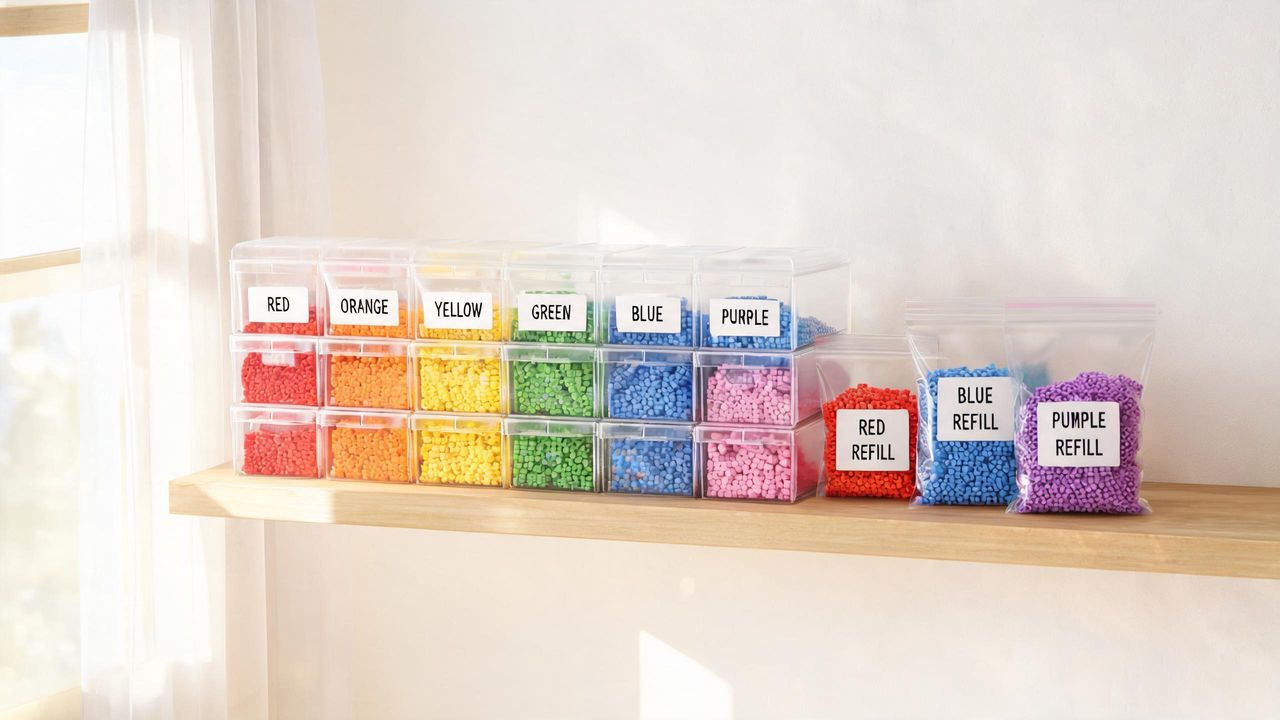
Containers: compartment boxes as the workhorse, bags for stock
Multi-compartment organizer boxes (commonly 24–36 slots) are the workhorse: one color per slot, the whole palette visible when the lid opens, colors picked straight from their slots. Two things to check when buying — slot depth (popular colors burn through hundreds of beads) and a lid that clasps tight (one drop mixes everything).
Single-color refills and bulk stock store in zip bags or sealed jars: bag by color code, label the bag, and tuck them into a drawer or storage bin. A bulk mixed tub can stay as one tub and be portioned out as used.
For travel, pack small: bring the colors on the day's shopping list in a compact case instead of hauling the whole stock.
Sort by color family or by color code?
For home crafters, sort by color family: red, orange, yellow, green, blue, purple, brown, black, white, gray — light to dark within each family. When you read a pattern you're looking for a color, not a code; family arrangement matches how the eye searches, and almost nobody remembers codes on sight.
For heavy users and single-brand players, sort by code: label each slot with the color code so refills and shopping-list reconciliation are exact. This fits a stable inventory fed by single-color refill bags.
The two can coexist: arrange family-first in the box and write codes on the labels — find the slot by eye, confirm the code by label. You get both benefits.
Storage conditions and when mixing is OK
Polyethylene is chemically stable and beads have no shelf life. Everyday storage needs three things: dust protection (lids), moisture protection (zip bags or a dry bin — damp beads dry out and work fine), and no years of direct sunlight (UV ages and discolors plastic).
Keep bead diameters strictly separate: Mini 2.6mm, Midi 5mm and Maxi 10mm use different pegboards, so a mixed jar means discovering the wrong size mid-pattern. Separate boxes or bins, labeled by size.
Same-diameter beads from different brands are physically interchangeable (the 5mm pitch is shared), but each brand's color codes are its own — mixing brands in one slot makes refills untraceable. Separate by brand; mixing colors within one brand is fine.
Recycle leftovers: after each pattern, return unused beads to their slots and keep the shopping list in mind as your running inventory — check stock before starting the next piece and buy only what's missing.
Frequently asked questions
- Do fuse beads need airtight storage?
- Not for everyday play: polyethylene is stable, so a closed lid and a dry spot are enough. For long-term stock or humid climates, add sealed bags or jars; damp beads work fine once dried.
- Do fuse beads expire or go bad?
- No. Polyethylene is stable at room temperature for years of normal storage. The only thing to avoid is years of direct sunlight — UV ages and discolors the plastic.
- Can I mix different brands in one box?
- Same-diameter beads from different brands are physically compatible, but their color codes differ, so a mixed slot makes refill shopping untraceable. Separate by brand; mixing colors within one brand is fine.
- How do I find a color fast while placing beads?
- Arrange a compartment box by color family so the eye searches without a lookup table, and write color codes on the slot labels for when the code matters.
Sources
- Perler 官方网站(色号目录与使用说明)
- Hama Beads 官方网站(丹麦 HAMA A/S,色号与规格)